Home / Water Damage Restoration
Licensed NY State restoration contractorFast, Documented Water Damage Restoration
We map the moisture across every single surface before extraction even starts, ensuring absolutely nothing gets missed.
The full cycle
What True Water Damage Restoration Actually Looks Like
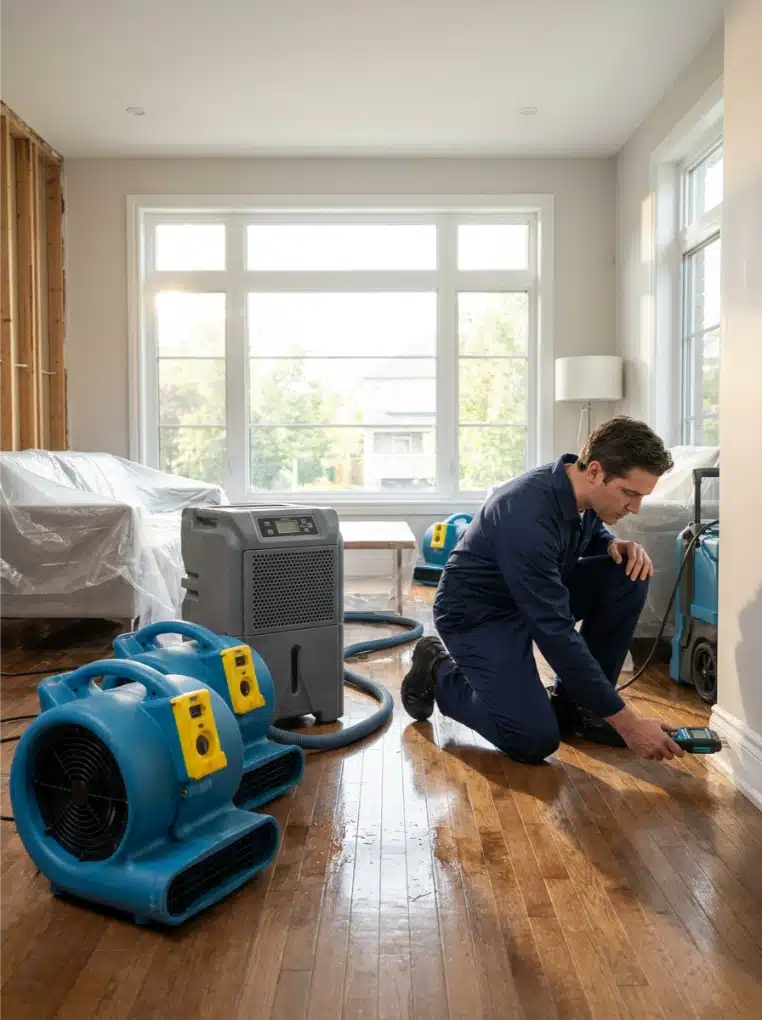
Water damage restoration is a full-cycle process - from the initial extraction of standing water to the final documented clearance.
It takes a lot more than a mop and a few fans. Whether you are dealing with a burst pipe, a roof leak, or a broken appliance, our approach covers every phase of the emergency. We use mechanical water extraction, calibrated structural drying - industrial air movers and dehumidifiers working to a plan - and zone-by-zone moisture documentation.
Our goal is not just to make your floors look dry. It is to bring the underlying structural materials back to a safe, acceptable standard, so you are not dealing with mold cropping up weeks later. Where water is still moving through the building, the containment phase is covered under water mitigation.
Emergency response
Emergency Water Extraction & Basement Flood Cleanup
When water is actively damaging your property, every minute counts.
Standing water does not just ruin carpets and baseboards. It seeps into subfloors and wicks up the drywall.
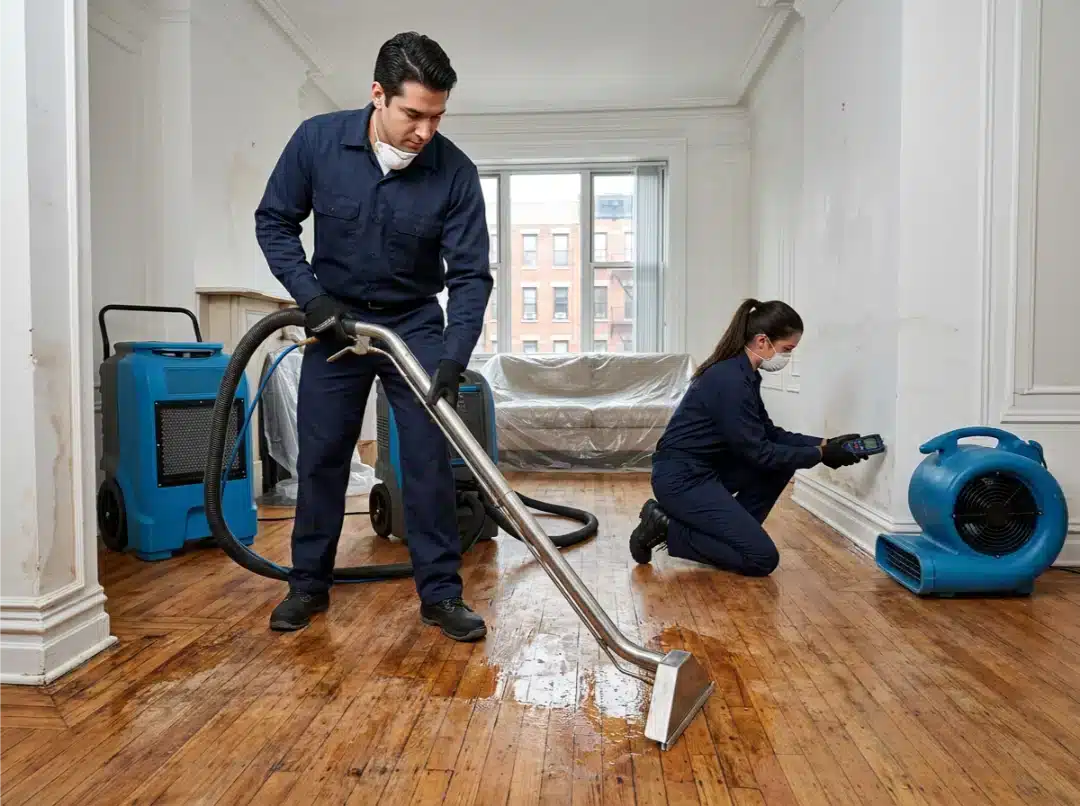
If you are dealing with a flooded basement or a major plumbing failure, our first priority is emergency water extraction. We use high-volume truck-mounted and portable extraction equipment to physically remove standing water from the property.
By getting the bulk of the water out quickly, we drastically reduce drying time and minimise the chance of permanent structural damage or secondary mold growth.
Material behaviour
Why Pre-War Buildings Need a Completely Different Approach
“The visible wet spot on your ceiling is rarely the true boundary of the damage.
New York City and the surrounding older neighborhoods in New Jersey are filled with pre-war building stock. These buildings absorb and hold water in ways modern construction simply does not.
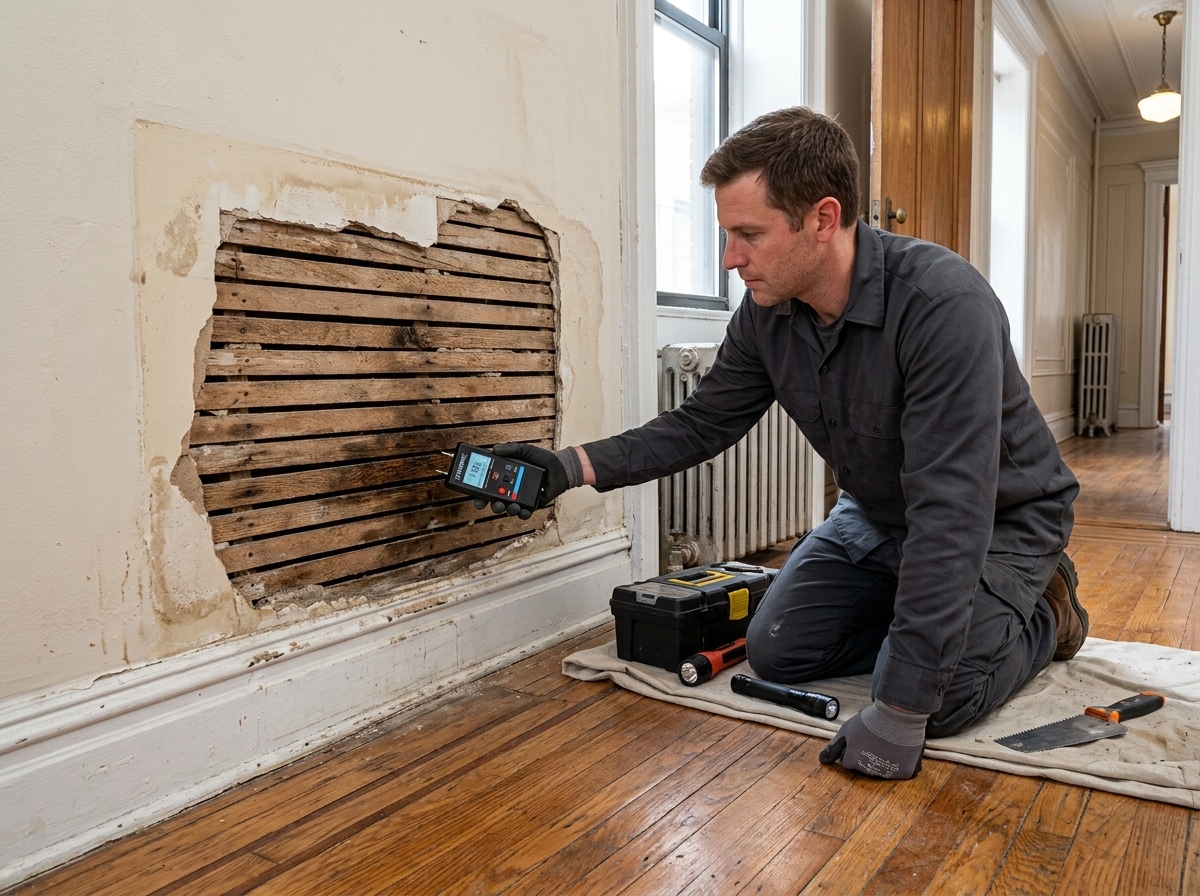
Plaster walls absorb water slowly, but they retain that moisture deep into the substrate.
Original hardwood floors cup and swell, trapping water between the boards and the subfloor beneath them.
Lath strips allow water to wick and travel horizontally in multiple directions.
Here is what most property owners do not realise: by the time you see a stain, the water has likely already travelled along shared pipes, original wood and through plaster.
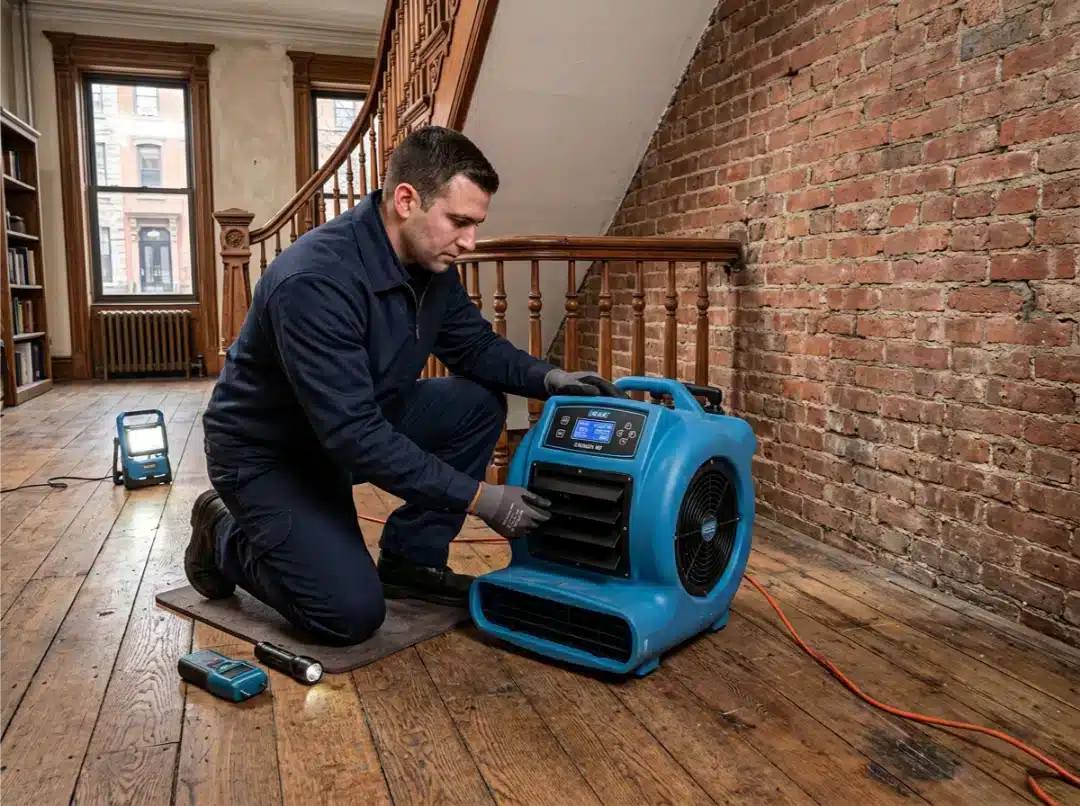
We understand how water moves through these specific architectural layouts, which is why we dry the entire structure - not just the part you can see. Where the source itself is concealed, we run moisture detection and leak tracking first.
Documentation
Clearance and Insurance Documentation
We do not pull our equipment until the readings prove your materials have met strict industry drying standards.
We package the initial moisture map, the daily logs and the final clearance readings into a clear report for you and your insurance adjuster.
Every zone gets a reading. Every reading gets logged. When the adjuster reviews the claim, they are looking at the same numbers we took on day one - not a reconstruction after the fact. Our guide to insurance coverage explains what carriers look for.
The sequence
The Four-Step Restoration Sequence
Every water damage job we take on follows a strict, documented sequence to ensure the job is done right.
Diagnostic Moisture Mapping
Before we turn on a single machine, we map the moisture. Using calibrated meters, we read every affected wall, floor and ceiling. This establishes a baseline record and tells us exactly where the water has migrated.
Emergency Water Extraction
Once we know where the water is hiding, we bring in the heavy-duty extractors and physically remove the standing and absorbed water from the affected materials.
Structural Drying
We place industrial air movers and dehumidifiers based on the specific materials that are wet - not randomly around the room. Daily readings track drying progress, and equipment is adjusted as different zones dry at different rates.
Clearance and Documentation
Equipment stays until the readings prove the materials meet strict industry drying standards. The moisture map, daily logs and final clearance readings are packaged into a clear report for you and your adjuster.
Water sitting in a wall does not wait for business hours.
Call 212-470-7993Coverage
Where We Work
We serve property owners, co-op boards, landlords and tenants across all five NYC boroughs - and routinely cross the river into New Jersey.
Because we operate from a centralised dispatch location, we can route our teams efficiently to where you need us, when you need us most.
Get started
Ready to Start? Here’s What the First Call Covers
The first call tells us what we need to dispatch the right crew with the right equipment.
212-470-7993Or email contact@moldwaterremediation.com. One call gets the process started - moisture map first, extraction scope confirmed before work begins.
Have this ready when you call
That is enough for us to size the response and get a crew moving.
- Your building address
- Unit or floor affected
- The source of the water, if you know it
- Approximately when the damage started
FAQ
Common Questions
How long does the drying process take?
Most residential jobs take about 3 to 5 days from the initial extraction to verified dry. The exact timeline depends on how much water is present and the types of materials involved. Plaster and original hardwood take longer to dry than modern drywall. We don't operate on guesswork - we pull our equipment only when the moisture meters say the job is done.
My ceiling feels dry to the touch now. Do I still need to call a professional?
Yes. Just because a surface feels dry does not mean the wall cavity or subfloor behind it is safe. Water follows the path of least resistance, frequently hiding under floorboards or behind baseboards. Our calibrated meters find hidden moisture that is completely invisible to the naked eye.
Do you charge extra for moisture mapping?
No. Moisture mapping is included in every job we take, and we don't bill for the readings taken before extraction begins. Creating that baseline record protects your insurance claim and ensures the work is scoped accurately, so it is a standard part of our process.
Can you handle water damage that leaked into my neighbour's apartment?
Absolutely. Multi-unit water damage is common in local co-ops and walk-ups. We map moisture across all affected units simultaneously and document each zone separately, which matters when multiple insurance carriers are involved in a single claim.
Related services